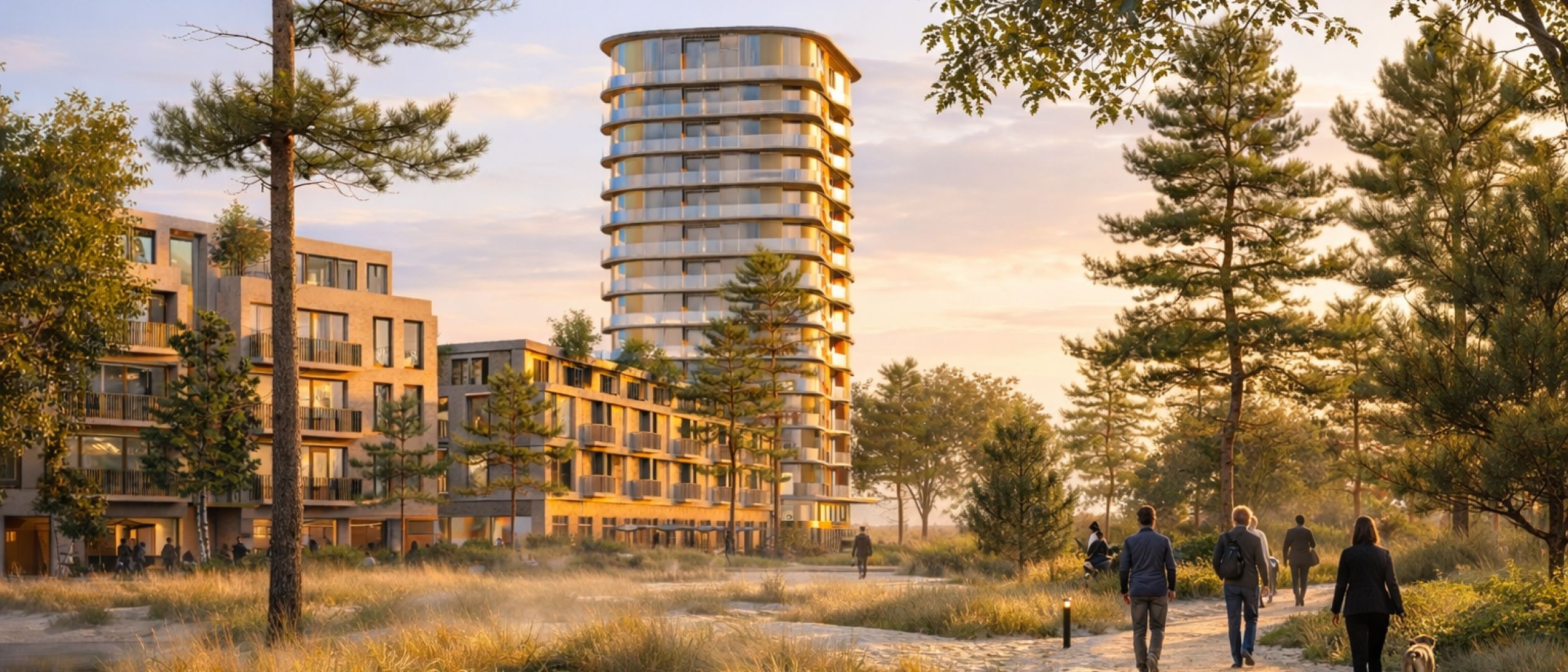
Lelystad, the Netherlands - Lelystad was originally designed as a city by the water. Over subsequent influences, the city center shifted to a more central location, so the city has not yet fully capitalized on its unique water-side position. In opdracht of the Municipality of Lelystad, we, together with involved parties, conducted a urban planning study to redefine this connection with water and create new opportunities for housing within a high-quality urban context.
| Location | Lelystad, the Netherlands |
| Assignment | Urban design |
| Design | 2025 |
| Client | City of Lelystad |
| Copyright images | Arcadis |
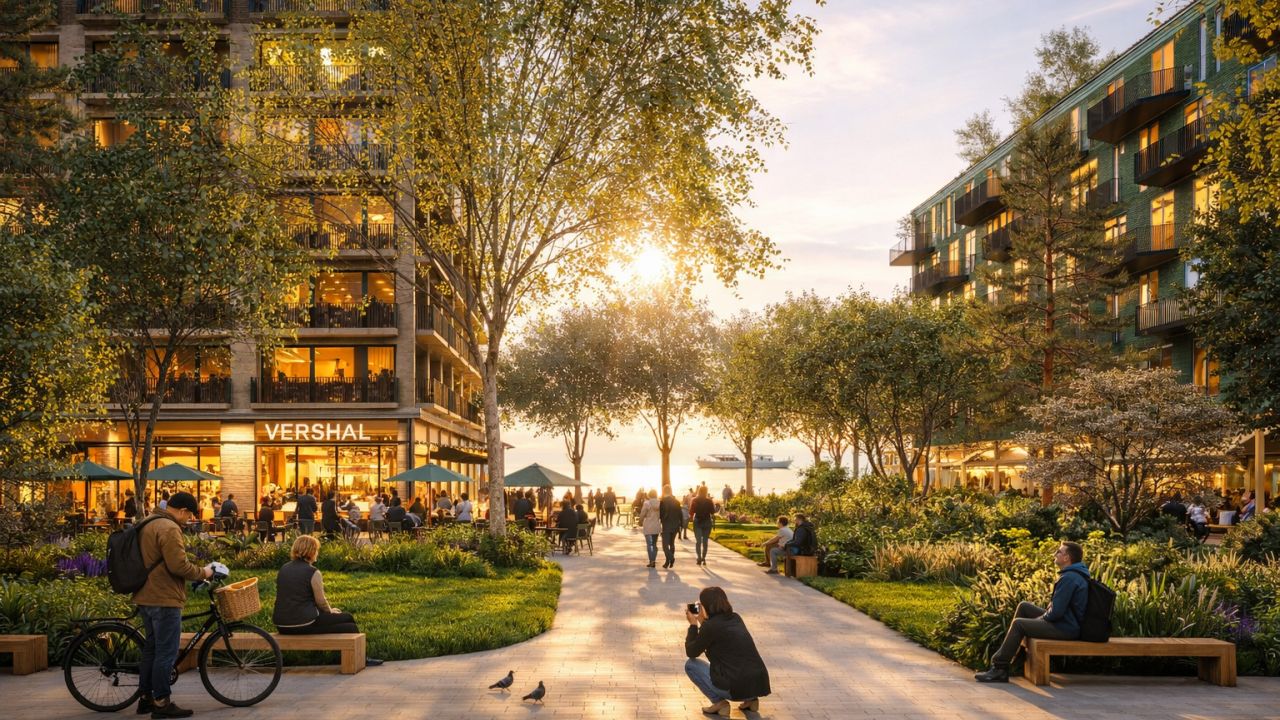
The study focuses on the development of the Waterfront, an area with an attractive and strategic location on the Markermeer. This area plays a key role in Lelystad’s growth ambitions and offers opportunities for various new housing typologies, recreation, sustainability, and economic development. Through the development of the Waterfront, Lelystad can reinforce its identity and redefine the relationship between city, nature, and water.
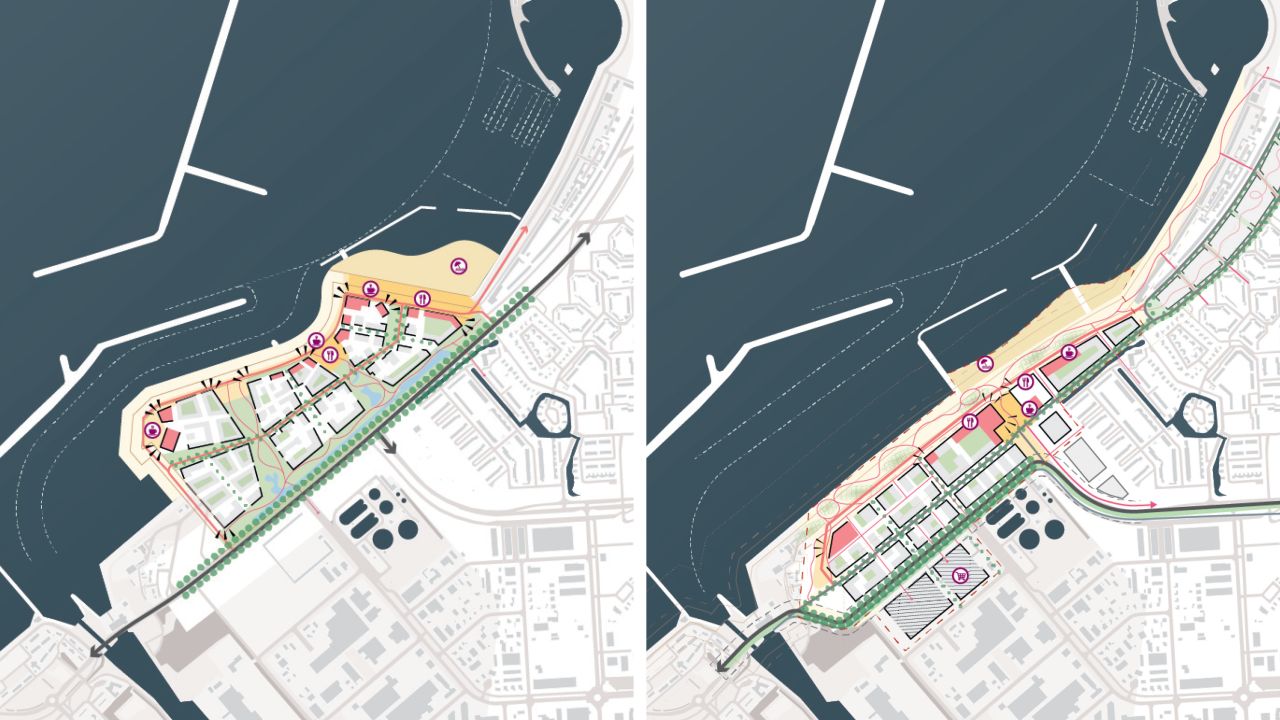
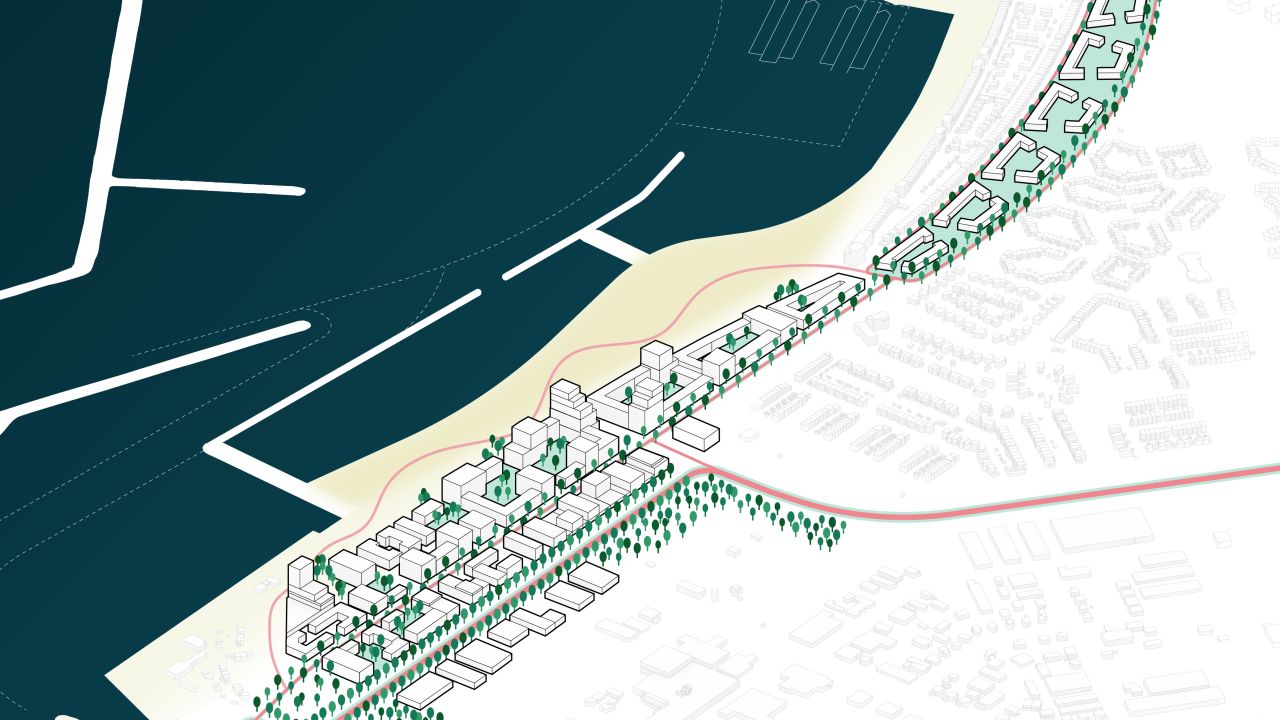
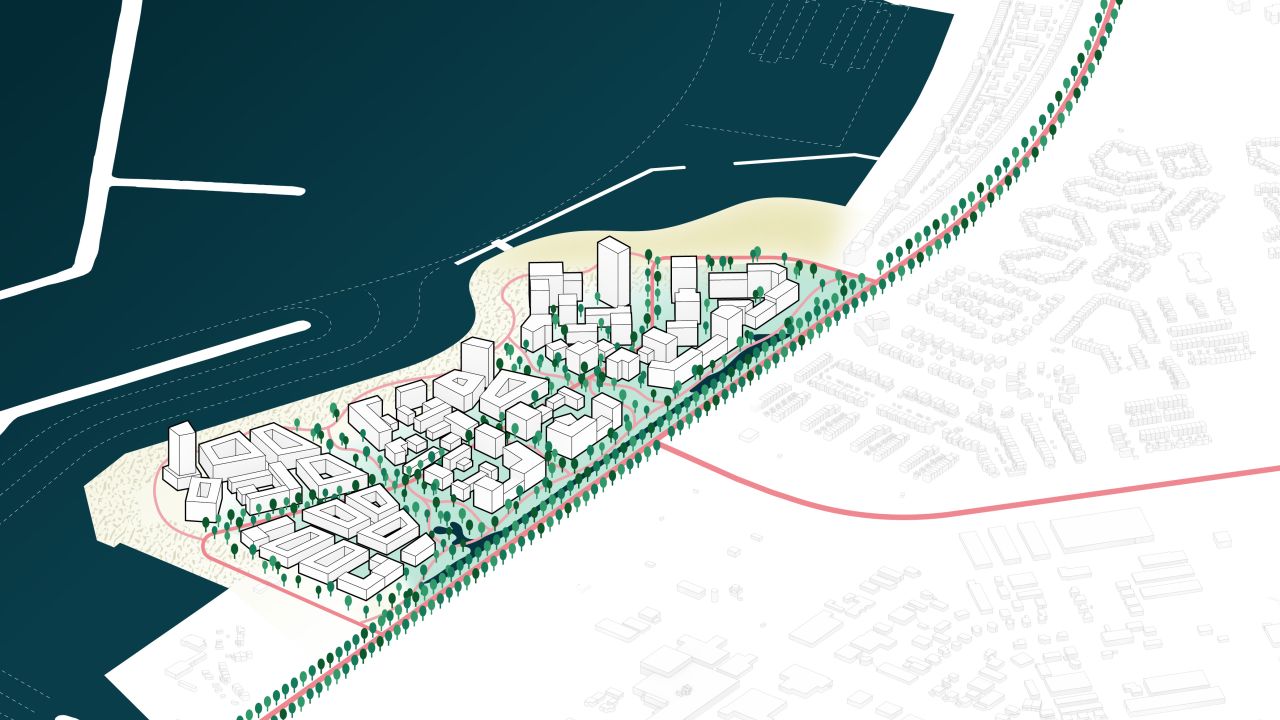
Two high-quality variants were elaborated in the study, both based on the principle of developing within the dikes where possible. The first variant includes land reclamation up to a maximum of 23.5 hectares, based on previous spatial explorations. The second variant excludes land reclamation and seeks space inland. Both variants are supported by a framework that makes choices regarding image, accessibility, housing quality, relationship with the water, public space, and parking, as well as information on opportunities and risks, costs, and phasing.
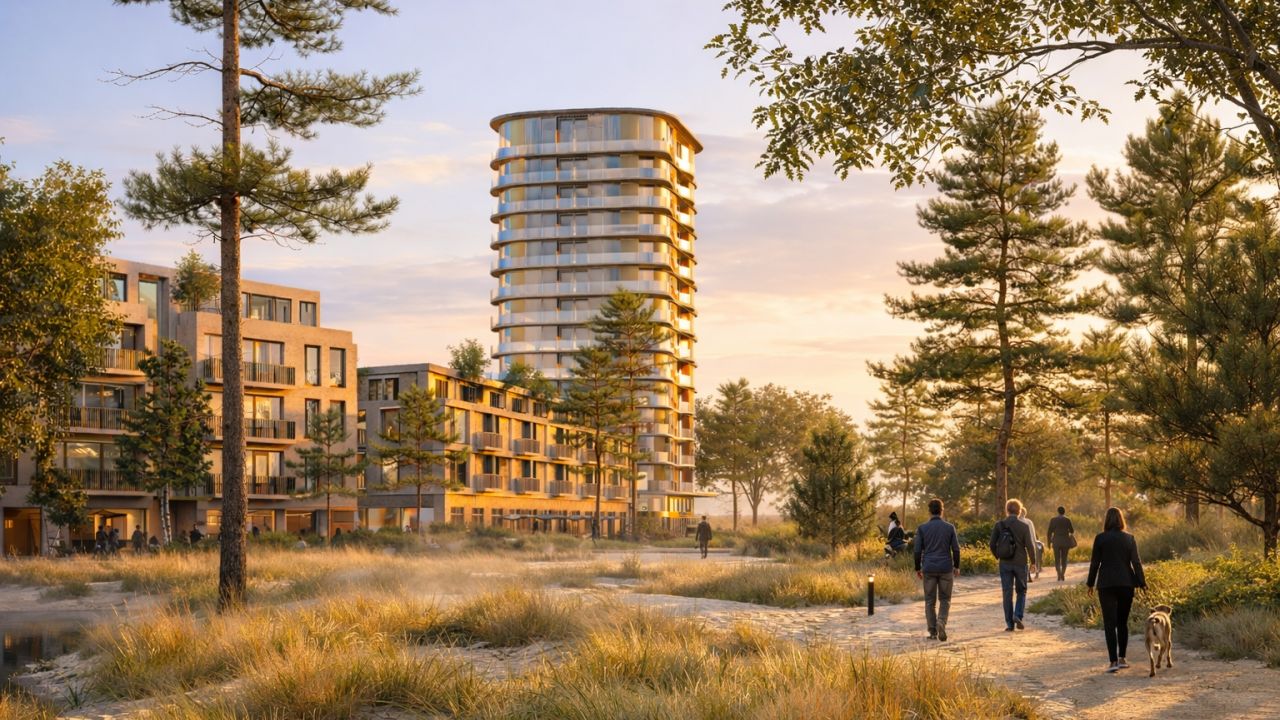
The variants share characteristics such as a waterfront presence, a diverse (residential) program, and a high-quality landscape design, while the qualitative expression differs in terms of the new identity and dynamics of the area. For example, the variant with land reclamation allows for natural shoals and an organic parceling pattern. The variant without land reclamation features a more rigid grid, creating a denser urban living environment where nature is more integrated into public spaces.
This approach provides concrete and well-founded decision-making information, ensuring the spatial quality level is maintained while considering the interests of various stakeholders. The goal is to support the municipality in achieving administrative consensus on the variant that will serve as the basis for the further development of Meerdijkhaven, an important part of the Waterfront.
The collaborative effort with the Municipality of Lelystad and other involved parties offers a solid foundation for the future of the Waterfront. By reconnecting the city with the Markermeer, a unique opportunity arises to further develop Lelystad as an attractive place to live, work, and recreate by the water. With attention to quality, sustainability, and identity, this study contributes to a new chapter in Lelystad’s development, where city, water, and nature come together in harmony.